
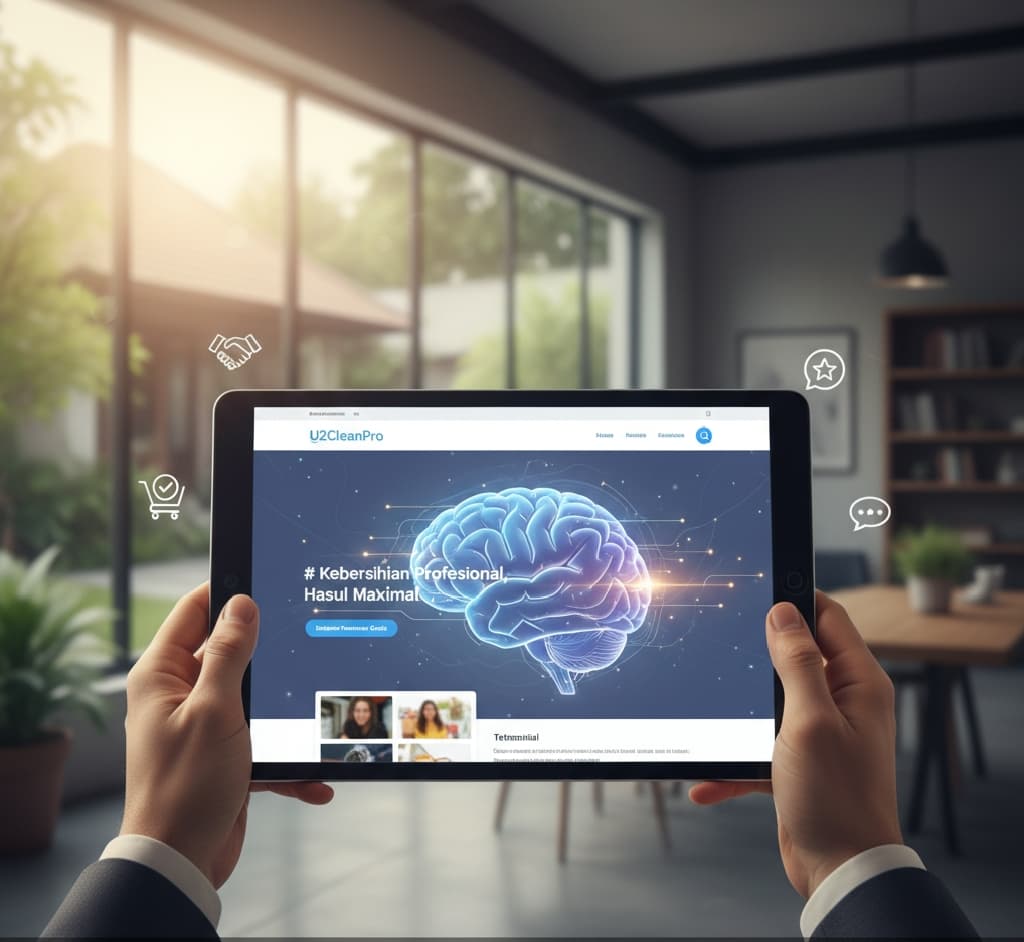
Why Your Website Fails to Get Clients? Conversion Psychology Case Study on U2CleanPro
Share this article
Imagine this: A potential client visits your website. They scroll... pause for a moment... then they hit the "Back" button.
You lost them.
This is the scenario experienced by 90% of business owners. They have a "beautiful" website, but it doesn't generate leads. The problem? The website was designed to be seen, not to be felt. It ignores the most important thing: how the human brain works.
A website is not a digital brochure. It's a 24/7 persuasion machine.
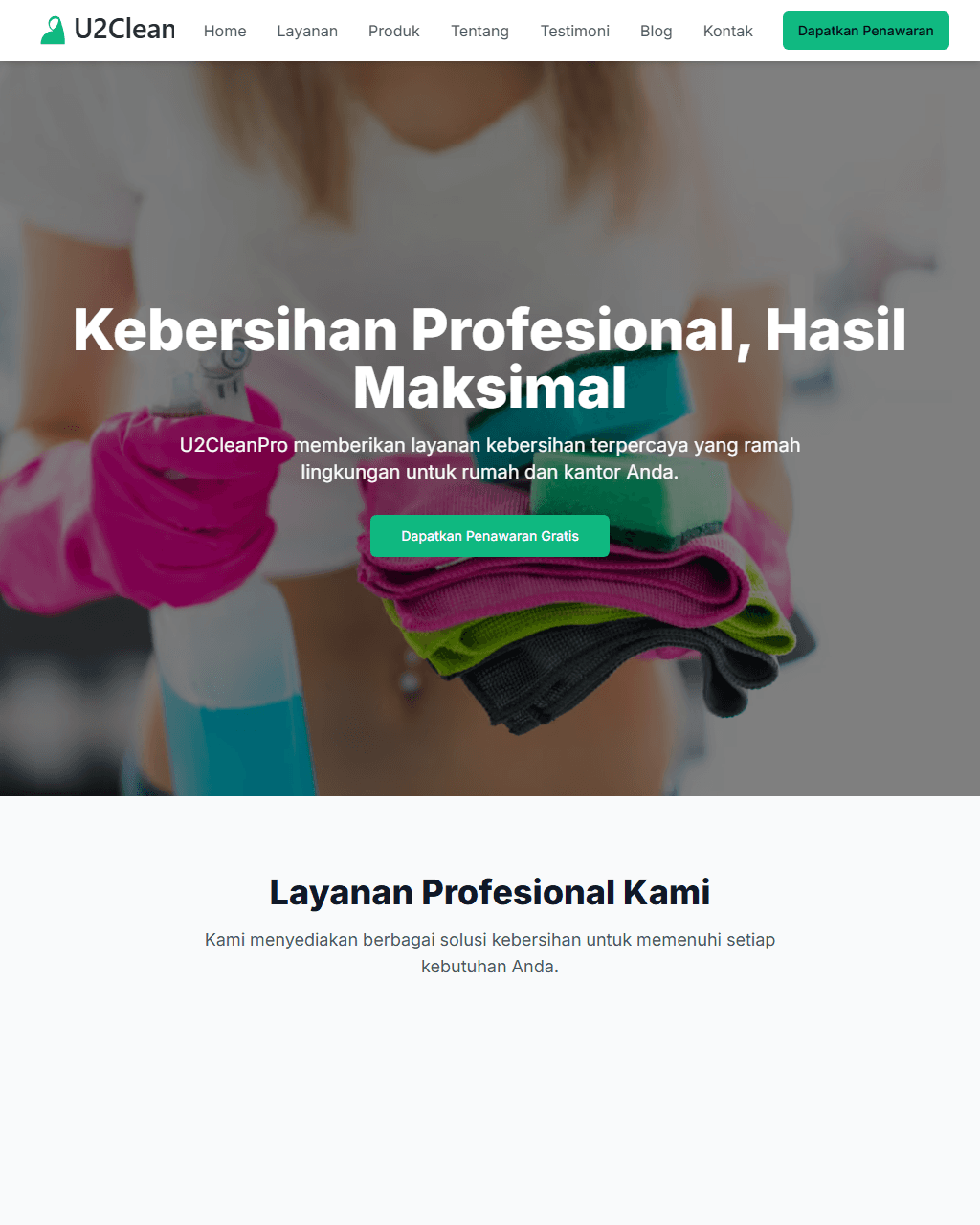
In this case study, we'll do a deep dive on the U2CleanPro website (https://cleanpro-beryl.vercel.app/), a project we designed not based on design trends, but based on cognitive science principles. We'll dissect how every pixel and word was deliberately chosen to guide visitors from doubt to action.
1. The First Second: Defeating "Cognitive Load" with Priming
The human brain is lazy. It evolved to conserve energy. When a visitor lands on your page, they unconsciously give you about 3-5 seconds to answer the question: "Is this relevant to me?"
If the answer isn't clear, they'll leave. This is called Cognitive Load.
How U2CleanPro Overcomes This:
- Visual Priming: Before visitors read a single word, they see the hero image—a professionally uniformed team at work. Their brain immediately processes signals: "professional," "team," "action," and "cleanliness." This is called priming; we "tune" the visitor's brain to receive our message.
- Result-Promising Headline: The main headline is "# Professional Cleanliness, Maximum Results". This is a promise, not a description. The brain isn't interested in "We are a cleaning service"; it's interested in "Here's the result you'll get." This directly answers "What's in it for me?".
2. Calming the Amygdala: Why "Trust" Is More Important Than "Features"
Hiring a service—especially a cleaning service—is a risk. Visitors will ask, "Can I trust these strangers in my home or office?"
This question is processed by the Amygdala, the fear and risk center in the brain. If the amygdala is active, logic won't work. The website's main job is to calm it down.
How U2CleanPro Overcomes This:
- Social Proof: We are social creatures. When in doubt, we look at what others are doing. The "What Our Clients Say" section is the most powerful amygdala-calming tool.
- Psychology Behind Testimonials: Notice, these testimonials use specific names (Andi, Citra, Budi) and specific quotes ("...super clean and fragrant," "...the team is professional and friendly"). To the visitor's brain, this is far more powerful than generic praise. It's a signal that "Others like me have taken this risk, and they survived (even enjoyed it)."
3. The Conversion Moment: The Magic of "Free" and "Loss Aversion"
This is the most important part. How do we turn passive visitors into active prospects?
Many websites fail here. They use CTAs (Call to Action) like "Order Now" or "Submit". These buttons imply work, commitment, and (most frighteningly) cost.
How U2CleanPro Overcomes This:
- Loss Aversion Principle: Nobel Prize-winning psychologist Daniel Kahneman proved that the pain of losing (time or money) is twice as strong as the pleasure of gaining something.
- The Solution: U2CleanPro's main CTA button is "Get Free Quote".
- Why This Is Genius (Neuroscientifically): The word "Free" is one of the strongest dopamine (happiness hormone) triggers. It effectively deactivates "Loss Aversion". No risk. No loss. The brain sees it as pure gain.
- The Result: The mental barrier to clicking almost disappears. We're not asking them to buy; we're offering them a gift. This is a small psychological shift that has a massive business impact.
Conclusion: Your Website Should Work for You
U2CleanPro was designed not as an art gallery, but as a strategic sales tool. It works in harmony with the natural cognitive biases of the human brain, not against them.
This website:
- Reduces Cognitive Load (easy to understand).
- Calms the Amygdala (builds trust).
- Eliminates Loss Aversion (makes conversion feel free).
Now, look at your website.
Is it just a passive digital "brochure"? Or is it a psychological salesman working 24/7 for you?
About the Author:
I'm uTuu, a web developer at Bali WebdeveLover. I don't just build websites; I design digital persuasion architecture.
Ready to transform your website from a "cost" to an "asset"? Contact me for a free website strategy analysis.
Related Posts
Ready to Escape OTA Dependency?
Let's build your Direct Booking system. Calculate how much you can save today.
Get Free Consultation